 |
  |
||
|
|
. |
||
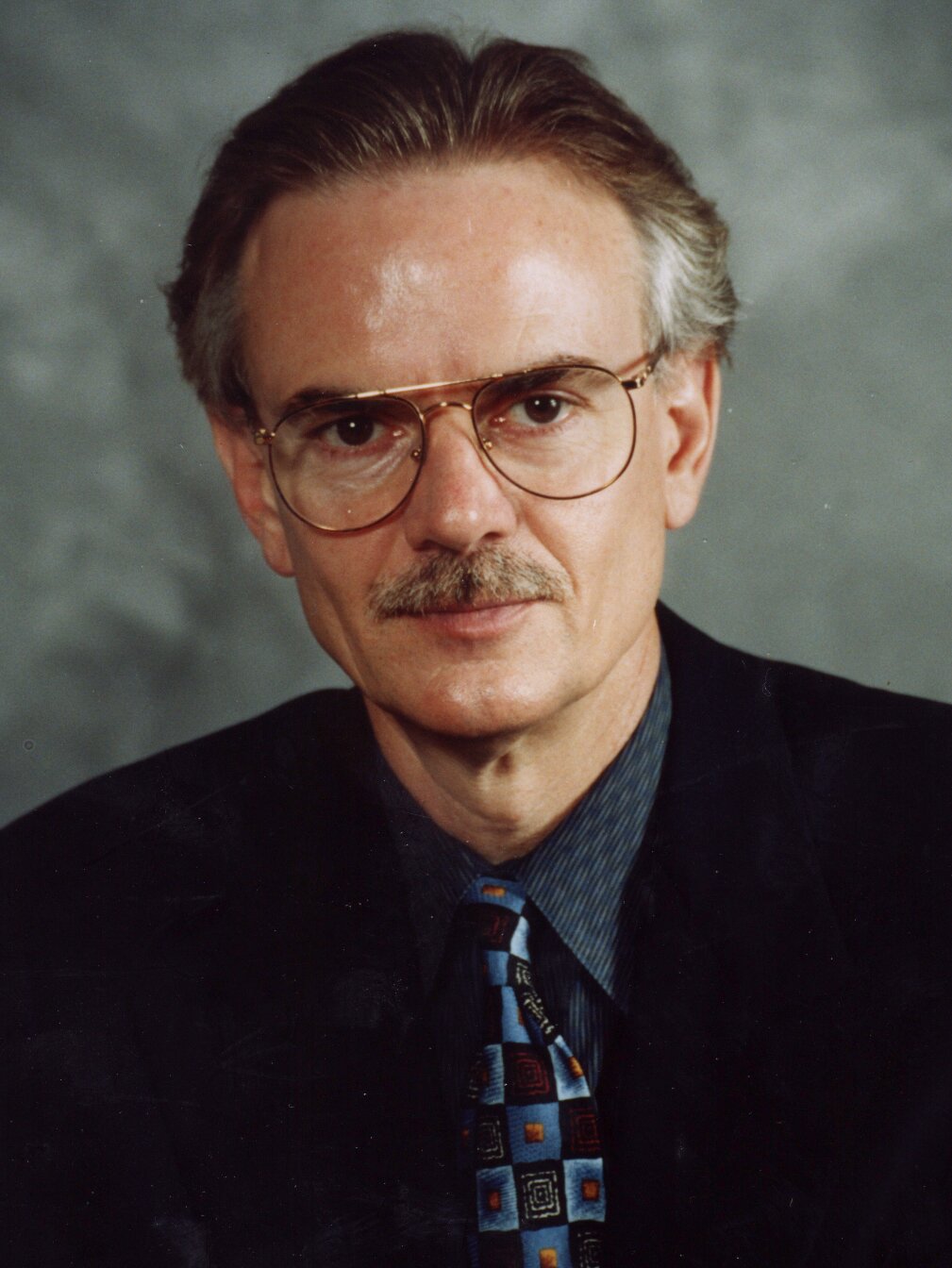 The Reverend Dr. Michael Kinnamon, Ph.D. The Reverend Dr. Michael Kinnamon, Ph.D.Former General Secretary Consultation on Church Union* Allen and Dottie Miller Prof. of Mission and Peace Eden Theological Seminary 475 East Lockwood Avenue St. Louis, Missouri 63119 (314) 918-2588 *COCU formally ended its existence on January 19, 2002 |
|||
|
“We Have Come This Far By Faith” |
|||
| . | |||
|
. I suppose there will be bigger news stories of the year 2002. Some of your local papers may hardly note this event. But for all with ears to hear, let it be recorded that in an age of fearfulness Christians gathered in Memphis, Tennessee to celebrate the love of God that casts out fear -- and to demonstrate such fearlessness in the way we live as churches with one another.
Let it be recorded that in an age of violence and vengeance, Christians gathered in Memphis to celebrate God’s work of reconciliation in Jesus Christ -- and to demonstrate this divine, reconciling grace in the way we live as churches with one another. Let it be recorded that in an age of me-first individualism, Christians gathered in Memphis to say “Without the gifts God has given you, we are impoverished” -- and to demonstrate this Spirit-given sense of interdependence in the way we live as churches with one another. Let it be recorded that in a nation still deeply distorted by the sin of racism, Christians gathered in Memphis to say, in the name of Christ, “This must stop!” -- and to demonstrate the radical inclusivity of the gospel in the way we live as churches with one another. I have said that “we gathered,” but, theologically speaking, that’s not correct. We have been gathered by God’s amazing grace. We have come to Memphis not to celebrate our achievement but to give thanks for what God has done in the midst of our churches over the past forty years, and to anticipate new directions in which God may lead us. It is possible, as you will likely hear more than once, to claim too much for what we are doing here this weekend. But it is also very possible to give too little thanks for what God has done, is doing, and will do to bring us together. * * * A quick look back over these forty years of the Consultation on Church Union (COCU) is a reminder that God does not act according to our linear timetables! But surely we can discern God’s presence in the landmarks of this journey: the famous sermon preached by Eugene Carson Blake in Grace Cathedral, The Principles of Church Union, The Plan of Union for the Church of Christ Uniting, generating communities, interim eucharistic fellowships, Mutual Recognition of Members in One Baptism, the Lenten booklets Liberation and Unity, the COCU liturgy of the Lord’s Supper, The COCU Consensus, Churches in Covenant Communion .... As I reflect on this history, seven themes or driving principles seem readily apparent: 1. Because we have communion with Christ, we also have communion with one another. This is not an option for discussion in our assemblies; it is a gift which we are called to make visible. Diverse as we are, says The COCU Consensus, by reasons of race, sex, physical or mental condition, language, politics, or vocation, we belong to one another by baptism into the one body of Christ. That’s the assumption from which all the rest follows. 2. The purpose of our life together is to bear more faithful and effective witness to the gospel in this society. “Americans more than ever,” said Dr. Blake in the sermon that started this journey, “see the churches of Jesus Christ as competing social groups pulling and hauling, propagandizing and pressuring for their own organizational advantage ... Our divided state makes unbelievable our common Christian claim that Jesus Christ is Lord and that he is the Prince of Peace.” Ecumenical documents are not always known for their directness, but COCU documents have often been surprisingly direct: “God abhors racism! .... God abhors sexism!” Our divided state, however, makes such claims unbelievable -- and it is time (past time!) for us to bear tangible witness to what we preach. 3. The church God calls us to become will be “catholic, evangelical, and reformed.” Forty years ago, these adjectives conjured up images of warring traditions; they defined fundamentally different ways of being church. But COCU has always had the audacity to say that it should not be so. The church is catholic, a universal community of faith across time and space. The church is evangelical, a witnessing community centered on the gospel of Jesus Christ as set forth in scripture. The church is reformed, a servant community that stands under the renewing judgment of God. The task is now to become what we are. 4. In the church of Jesus Christ, those whom society pushes to the margins are treated with the honor due each child of God. To take but one example, COCU has prodded our churches to recognize and denounce the frequent exclusion of persons with so-called disabilities. The embodied witness of such persons as Harold Wilke and Betty Knapp has shaped our life together. 5. In an era when theology is often regarded as a four-letter word (if it’s regarded at all!), COCU texts have insisted that theology matters. How we act as Christians cannot be divorced from what we believe. And so, while diversity of tradition and confession has been valued, COCU has also been an arena in which, without apology, we have sought to speak together about theological things. 6. Worship has been, is, and will be at the heart of our relationship with one another. Some of the very best work done through these forty years of consultation has been in the form of prayer. In recent years, several of the COCU member churches have produced new books of worship; but I dare say that each of them bears the unmistakable mark of participation in this church unity effort. Which leads me to my seventh driving principle: 7. Our churches can be, and already have been, renewed through the sharing of gifts. My favorite line from The Principles of Church Union is this: “We have nothing to lose but our separateness” -- and everything to gain from what the consensus text calls “a mutually enriching appropriation” of treasures God has given to our neighbors. Any such list of key themes will obviously reflect the preferences of the list maker. I am convinced, however, that these seven principles have been in the minds of those who have given leadership to COCU over the past four decades -- persons such as Frederick Jordan, Janet Penfield, Arthur Marshall, George Pike, Peggy Way, Albert Outler, George Beazley, Stephen Bayne, Marian Bass, John Krumm, LeRoy Nesbitt, Bill Grove, Margaret Sonnenday, Bill Thompson, Clinton Hogard, Phoebe Hoff, Harold Johnson, John Deschner, Vivian Robinson, Walter Bingham, John Burt, Cynthia Campbell, Yoshio Fukuyama, Robert Taylor, Rachel Henderlite, Clyde Miller, Robert Gibson, Jeanne Audrey Powers, Vinton Anderson, Paul Washburn, Rena Karefa-Smart, William Watley, J. Robert Nelson, Lois Stair, James McCord, Joseph Johnson, Captolia Newbern, E. P. Murchison, David Colwell, Dottie Barnard, Thomas Hoyt, James Matthews, Doris Pettibone, Keith Watkins, Albert Pennybacker, Jean Caffey Lyles, Lewis Mudge, Elmer Arndt (as well as such faithful observers as John Ford, Joseph Burgess, and the late Jack Hotchkin). And, of course, we have already introduced the former general secretaries. Please forgive me for having failed to name so many other crucial figures; but even this very partial roll call reminds us of the legacy that leads to Memphis. * * * That, at least in part, is what God has done. This weekend we celebrate as well what God is doing to bring us into a new level of relationship with one another, a relationship we are calling Churches Uniting in Christ (CUIC). I won’t rehearse the eight visible marks of CUIC (they are widely available); but I do want to name four crucial assumptions that emerged at COCU’s Eighteenth Plenary (St. Louis, 1999), assumptions that help explain the character of this new covenantal relationship. 1. The St. Louis Plenary said, in effect, that all issues of faith and order need not be resolved before our churches can give formal expression to the life that, in many places, we already share. To be more specific, while we do not deny that ministries blessed by the Spirit flourish in the other members, our churches are not yet ready to declare a mutual recognition and, especially, reconciliation of our ordained ministries. But that doesn’t mean we can’t share far more deeply than we have until now in sacraments, witness, and service. The great leader of the Anglican Communion, William Temple, put it this way in a letter inviting the churches to become part of the WCC: “We may not pretend that the existing unity among Christians is greater than it in fact is; but we should act upon it so far as it is already a reality.” That is the assumption behind Churches Uniting in Christ. Books on ecumenism sometimes speak of five “stages” of inter-church relations: competition, co-existence, cooperation, commitment, and communion. This weekend we are, symbolically, moving from cooperation to commitment on our way, we pray, toward communion that will include a reconciled ministry. To put it yet another way, the proper tone for this weekend is “already – not yet.” The inauguration of Churches Uniting in Christ on Sunday afternoon will be a highly significant event in the history of Christianity on this continent, but none of us should leave that service satisfied. Uniting is the operative word. 2. The presence of three predominantly African-American denominations has long meant that racism is a primary concern for the Consultation. Of course, that should be true whether or not the AME, AME Zion and CME are part of the circle; but we all know that their presence has made a decisive difference. Indeed, their participation has meant that COCU has challenged the color barrier in American Christianity more directly than any previous ecumenical effort. But the plenary in St. Louis went still further to make “combating white privilege” the mission core of our new relationship. I pray, and expect, that we will address many other issues together; but how we respond to racism, within our churches and in our society, is the acid test of CUIC. Is all our talk of racial inclusiveness just so much rhetoric? Now is the time to find out. Please remember, however, that Churches Uniting in Christ is not a social justice coalition. We are committed to combating racism together because of our shared understanding of what it means to be the body of Christ. CUIC is a sacrament-centered relationship. At the Lord’s table we learn, over and over, that though we may look different in the eyes of the world we are truly related to one another by blood. And, thus, the celebrations and struggles of one church should be the celebrations and struggles of all the others. If racism diminishes one, it diminishes all. That, I take it, is our confession and our commitment as Churches Uniting in Christ. 3. COCU has, of course, always been open to the possibility of new members; but that welcome was made even more explicit and flexible when the St. Louis Plenary spoke of concentric circles of relationship. A category of “partners in mission and dialogue” was subsequently created by the COCU Executive Committee; and I am very pleased to report that, at its Churchwide Assembly last August, the Evangelical Lutheran Church in America formally and overwhelmingly voted to become such a partner. A delegation from the ELCA is present at this inaugural weekend, a representative of Presiding Bishop Mark Hanson will join other church leaders on Monday in signing an “Appeal to the Churches to Combat Racism”, and the ELCA has become a full participant in the new, intensive dialogue on ministry. Both provinces of the Moravian Church have indicated their intent to vote on “partner in mission and dialogue” status when they meet in synod later this year -- and other churches have expressed interest in this level of relationship. 4. An earlier proposal for expressing our unity in Christ envisioned the establishment of “covenanting councils” in communities across this nation; but the plan that emerged from the St. Louis Plenary eliminated any such prescribed structure. As a result, CUIC, while it will have a Coordinating Council and certain working groups, is less a structure than a framework for growth in relationships centered around sharing in sacraments and service. It is an officially-sanctioned invitation for our churches, especially our congregations, to live with one another differently. I will say more about this in a moment. * * * That, I submit, is some of what God has done and is doing in and through the life of our churches. Now the harder question: Can we chart a future direction that is consistent with God’s calling? Let’s start with the easy part: There are several things that our churches are committing themselves to do together by virtue of becoming Churches Uniting in Christ. For example, we are committing ourselves to an intensive dialogue toward the goal of a fully-reconciled ministry -- toward the day, that is, when the ordained ministers of one church can serve in any of the others when invited. With God’s help, we intend to complete this work by 2007. This dialogue obviously doesn’t start from scratch (we’ve been talking about ministry for a few years!); but it now proceeds with a new sense of resolve, even urgency, and with new partners at the table. Recent ecumenical agreements may provide insights as we seek a common ministry that will be recognized by the wider church. The Recommendation approved by the COCU churches also speaks of an ongoing dialogue on faith, and I hope we don’t lose sight of this commitment. Our churches are able now to say to one another, “We recognize in you the essential contours of the faith as expressed in scripture and tradition.” But this doesn’t mean that any of us bears fully adequate witness to the faith of the apostles. There are questions -- for example, about the place of other religions in God’s plan of salvation -- that we ought to be exploring together. I have already stressed that by becoming Churches Uniting in Christ we are committing ourselves to a coordinated assault on racism, including a sharing of resources and joint advocacy on matters of public policy. The Lutheran-Reformed “Formula of Agreement” speaks of “mutual affirmation and admonition,” and that is clearly the intent of CUIC as well. According to the Recommendation approved by our churches, we now have not only the right but the responsibility of holding each other accountable to our pledge to oppose all marginalization and exclusion in church and society based, yes, on race, but also on age, gender, forms of disability, sexual orientation, and class. Does this mean that our churches agree on the complex questions surrounding homosexuality or the distribution of wealth? Of course not. But it does surely mean that together we affirm every neighbor as an infinitely-valued child of God for whom Christ died, and that we commonly oppose the often-loveless attempts to exclude or demean anyone God loves. The other obvious commitments have to do, in large part, with congregational life. I realize that our denominational offices generally cannot mandate congregational changes; but national leaders can teach about CUIC and strongly encourage congregations to take advantage of its possibilities. Let me take as examples the two congregations I know best. From 1993 until we moved to St. Louis in 2000, my family and I were members of Midway Christian Church in beautiful Midway, Kentucky. It is a town of, perhaps 1400 residents -- and no fewer than ten churches, five of which can now add “Member of Churches Uniting in Christ” to their signboards. Of these five, two are almost entirely African-American while three are almost entirely white. Midway Christian shares an alley with St. Matthew’s A.M.E.; their backdoors are about 150 feet apart. But when we hosted a Week of Prayer for Christian Unity service in 1998, several members of the St. Matthew’s congregation told me it was the first time they had ever set foot inside Midway Christian Church -- 150 feet away in a town of 1400. You get the picture. Churches Uniting in Christ is an opportunity -- God-given, I believe -- for the churches in a place such as Midway to live with one another far more intensely: to share the Lord’s Supper three, four, five times a year ... to undertake regular mission projects together ... to include the others in all baptisms and special events ... to include the others in ice cream socials and other “family” celebrations ... to invite representatives of other congregations to serve on boards and committees ... to teach about the other churches and to share educational programs ... to post each other’s bulletins or newsletters and to lift up their prayer concerns in weekly worship. The only real limit, apart from ministry, is imagination and will. Our current congregation is not in rural Bluegrass but downtown St. Louis. The mission challenges are different, but the opportunities for shared life no less obvious. Within a hundred yards of our congregation, Union Avenue Christian Church, are Pilgrim UCC, Parrish Temple CME, and Westminster Presbyterian -- all of which have suffered declining membership as a result of urban flight and each of which needs the others in order to make a vital Christian witness in that part of the city. The real test of CUIC, however, is whether attitudes begin to change. When the local CME congregation protests racial profiling, do the other CUIC churches in the community see it as their issue? When a leader in the United Methodist Church dies, do the rest of us mourn the loss as our own? When the local Episcopal Church confirms a group of young people, do the other churches in the neighborhood celebrate the event and pray for those young people by name? When the Presbyterian Church struggles with questions of human sexuality, do the other churches pray and struggle with them? When the UCC starts a new congregation in a growing part of our community, do we celebrate and support this witness to our common Lord or do we wonder why “we” didn’t get that property first?! There is another shift in attitude that must now occur. For the past forty years, our churches have related to an organization called COCU. Now we must begin to relate more directly to one another. COCU is not and has not been an expression of church; it has been a consultative body for helping to create the conditions for unity. Churches Uniting in Christ is much more a way of living as church together. I need to say this carefully: CUIC is not the church. Each of the communions will continue to baptize and ordain as separate bodies. But CUIC is a commitment, a substantive covenant, signifying that life together is an essential dimension of who we are as churches. In this sense, Churches Uniting in Christ is not something we join; it is something we are -- together. Such changes in attitude will not come overnight! I can imagine a plenary meeting of CUIC -- two years from now? three years from now? -- in which our churches ask each other a number of questions to see how far our relationship has grown. Questions like:
The great danger we face is not that our new relationship will be opposed but that it will be ignored since it does not involve a consolidation of structures. I, for one, do not lament the fact that the Plan of Union was not approved in the early 1970s. Had it “succeeded,” we might have been less likely to repent, more likely to glory in our institutional power. No, I prefer to confess that God has led us to this moment. The lack of structure, which calls for imagination more than legal adherence, puts added responsibility on each of us -- church leaders, pastors, seminarians, people in the pews -- to be active advocates for this new thing that God is doing. Here in Memphis, with the inauguration of Churches Uniting in Christ, our churches are at a crossroads. We have said no to new structures, but we must not say no to new opportunities! To paraphrase scripture, God has set before us this day unity or separation, renewed witness together or continued fragmentation. We can return on Tuesday to business as usual, to our normal patterns of benign neglect. Or we can go from here with clear resolve: Henceforth, we will live differently with one another! The bottom line is the gospel. In a world of fearfulness and violence and exclusivity, we have the enormous privilege and challenge of bearing witness, in a tangible way, to the fear-casting, reconciling, including, amazing grace of God -- to whom be the glory forever and ever. Michael Kinnamon
|
|||
|
Comments? Questions? Send them to our webmaster |
|||











 Printable PDF file of